The Long Way Back to Ourselves
9.7
The Possibility of Meaninglessness
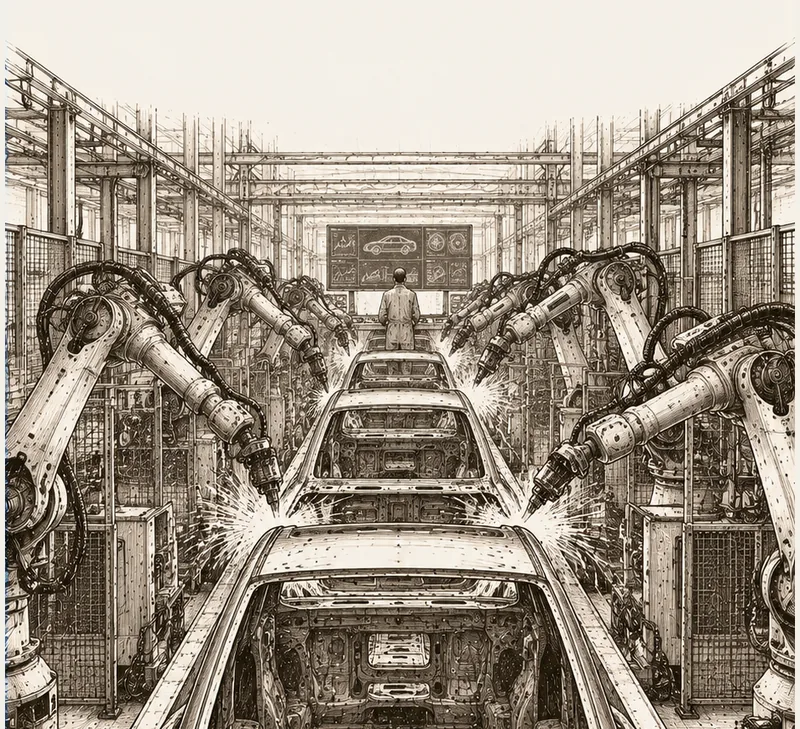
This episode starts from a robotic arm welding without a break and tests whether the rule that every wave of automation created more work than it destroyed holds again, with Keynes's failed prediction of a fifteen- or twenty-hour work week showing how uncertain such forecasts are. David Autor's distinction between complementation and substitution shows in the ATMs of the 1970s and 1980s: bank employees per branch fell, while the total stayed stable. Pilot trials of basic income show that guaranteed income barely changes employment but does not solve the meaning problem. As a third picture, the episode introduces structural superfluousness, documented in deaths of despair in economically stranded regions.